

If you check your inbox right now, chances are you’ll find at least one message that begins with “Hope you are doing well.” It’s everywhere job emails, client conversations, networking messages, and even casual check-ins.
But have you ever stopped to think: why do people use this phrase so often?
Is it just a habit, or does it actually serve a purpose?
In this guide, we’ll break down the real reasons behind this common email greeting, what it communicates (even when it feels generic), and whether you should keep using it or switch to something better.
What Does “Hope You Are Doing Well” Really Mean?
At its core, this phrase is a polite and neutral way to start a conversation.
It doesn’t require a deep emotional response. Instead, it acts as a light acknowledgment similar to saying “hello” in person.
When someone writes it, they’re usually trying to:
- Sound respectful
- Create a friendly tone
- Ease into the main message
In most cases, it’s not about your actual well-being it’s about starting the conversation smoothly.
The Real Reason People Use This Phrase
1. It’s a Safe and Universal Greeting
One of the biggest reasons this phrase is so popular is because it’s safe.
It works in:
- Formal emails
- Professional communication
- First-time interactions
- Cross-cultural conversations
People use it because it’s unlikely to offend anyone and fits almost every situation.
2. It Softens the Start of an Email
Jumping straight into a request can feel abrupt.
Compare this:
- “Send me the report by 5 PM.”
vs - “Hope you are doing well. Could you please send the report by 5 PM?”
The second version feels more polite and considerate.
That’s because this phrase acts as a buffer, making communication feel less transactional.
3. It Shows Basic Courtesy
Even if it sounds generic, it still signals politeness and professionalism.
In workplace communication, small gestures like this help:
- Build trust
- Maintain respect
- Keep interactions positive
It’s a simple way of saying, “I acknowledge you as a person, not just a task.”
4. It Helps in Professional Relationships
In emails to clients, managers, or new contacts, tone matters a lot.
Using a neutral opener like this helps:
- Avoid sounding too direct
- Create a comfortable starting point
- Maintain a professional image
Especially in formal settings, people prefer to play it safe rather than risk sounding too casual.
5. It’s a Habit (More Than You Think)
For many people, this phrase is just autopilot writing.
They’ve seen it used countless times, so they naturally repeat it without thinking much about it.
Over time, it becomes:
- A default opening line
- A writing habit
- A “go-to” phrase when unsure what to sa
Is “Hope You Are Doing Well” Overused?
Short answer: Yes but that doesn’t make it useless.
Because it’s so common, it can sometimes feel:
- Repetitive
- Impersonal
- Forgettable
However, it still works because it’s:
- Safe
- Clear
- Universally understood
The real issue isn’t the phrase itself it’s how often and where you use it.
When You Should Use It
This phrase still works well in situations like:
- First-time professional emails
- Client communication
- Formal requests
- Networking messages
In these cases, it helps maintain a polite and neutral tone.
When You Should Avoid It
You might want to skip it when:
- You’re emailing someone regularly
- You want to sound more personal
- The message needs to be direct and quick
- You want to stand out
Using it repeatedly in ongoing conversations can make your emails feel robotic.
Better Alternatives to Use Instead
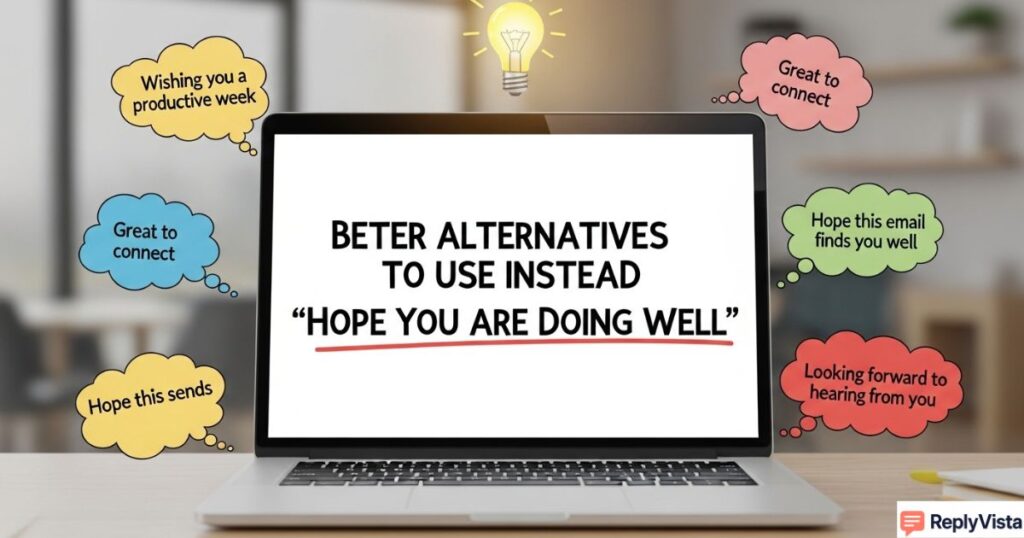
If you want your emails to feel more natural and engaging, try these:
Professional Alternatives
- “I hope your week is going well.”
- “I hope you’re having a productive day.”
- “I hope everything is going smoothly on your end.”
More Personal Options
- “It’s great to connect with you.”
- “I was thinking about our last conversation…”
- “Hope things have been going well since we last spoke.”
Direct and Modern Openers
- “Thanks for your email.”
- “I appreciate you reaching out.”
- “I wanted to follow up on…”
These feel more intentional and less generic.
Does This Phrase Affect How People See You?
Surprisingly, yes at least a little.
Using “Hope you are doing well”:
- Makes you seem polite and professional
- Keeps communication neutral
- Reduces the risk of sounding harsh
But overusing it:
- Can make your writing feel generic
- May reduce engagement
- Doesn’t help you stand out
So the key is balance.
A Simple Rule to Follow
Here’s an easy way to decide:
- Use it when you need to be polite and safe
- Skip it when you want to be memorable and engaging
Think of it as a tool not a requirement.
Recommended: Thank You for All You Do
FAQs
Why do people always say “Hope you are doing well”?
Because it’s a safe, polite, and widely accepted way to start an email without sounding too direct.
Is it professional to say “Hope you are doing well”?
Yes, it’s considered professional and appropriate, especially in formal or first-time communication.
What can I say instead of “Hope you are doing well”?
You can use alternatives like “I hope your week is going well” or “Thank you for your email” depending on the context.
Final Thoughts
“Hope you are doing well” has become a staple of modern communication for a reason it’s simple, polite, and effective.
But like any overused phrase, it loses impact when used too often.
The best approach isn’t to avoid it completely, but to use it intentionally. Mix it with more natural, specific, and engaging openers to make your emails feel more human.
At the end of the day, good communication isn’t about perfect phrases it’s about clarity, tone, and connection.

We are an AI-powered SEO and content writing platform dedicated to helping websites rank higher, grow organic traffic, and look their best. Our mission is to make SEO and web design simple, effective, and accessible for everyone. Let’s achieve more together.