

Laughter can be a beautiful thing, but it can also sting when directed at you in a mocking or uncomfortable way. When someone laughs at you, it can trigger social anxiety, hurt your self-esteem, and leave you questioning yourself. The problem is, many people don’t know how to respond confidently without escalating the situation.
This guide will help you understand why people laugh, what it really means, and provide 25+ practical, witty, and empowering replies so you can handle mockery gracefully. Whether it’s in public, at work, or online, you’ll learn to protect your peace, build emotional resilience, and turn these moments into growth opportunities.
What Does It Mean When Someone Laughs at You?
Problem: You hear laughter and immediately assume it’s directed at you. That feeling of being mocked can hurt deeply.
Agitate: Often, laughter is misunderstood. It could be playful, nervous, or even a reflection of someone else’s insecurities. Misreading it can cause negative self-talk, embarrassment, and strained relationships.
Solution: Consider these points:
- Intent behind laughter: Are they laughing with you or at you?
- Context matters: Is it playful teasing, mockery, or social anxiety in a group setting?
- Emotional regulation: Don’t take it personally. Pause and observe before reacting.
Example: If a colleague chuckles after your comment, notice their tone. If it’s lighthearted, a witty remark like, “I didn’t realize I was that entertaining,” keeps it fun and confident.
Understanding the Context: Why People Laugh
People laugh for many reasons:
- Insecurity or jealousy: Mockery often reflects their own issues.
- Playful social bonding: Not all laughter is negative.
- Nervousness or habit: Some laugh to fill awkward silence.
Tip: Understanding why someone laughs helps you respond wisely and maintain emotional control.
Example: If someone laughs because they don’t understand your hobby, remind yourself: “This hobby brings me joy, and their opinion doesn’t define me.”
Common Situations Where People Laugh at You
In Public or Social Settings
Being laughed at in public can feel humiliating. Protect your peace by:
- Staying calm and composed
- Using confident replies like “I see you’re enjoying yourself”
- Avoiding over-explaining
At School or College
Classmates laughing at you may trigger social anxiety. Strategies:
- Respond with humor or curiosity: “Is there something you’d like to share?”
- Seek allies among friends
- Don’t internalize mockery
At Work or Professional Environments
Coworkers laughing at you can affect confidence and professionalism. Tactics:
- Maintain composure
- Use professional responses: “Interesting response; care to elaborate?”
- Involve authority if harassment is repeated
Online or on Social Media
Digital mockery spreads faster and can impact self-esteem:
- Don’t feed the trolls
- Respond with witty or positive comebacks
- Focus on your online community and supportive peers
30+ Best Replies & Comebacks When Someone Laughs at You
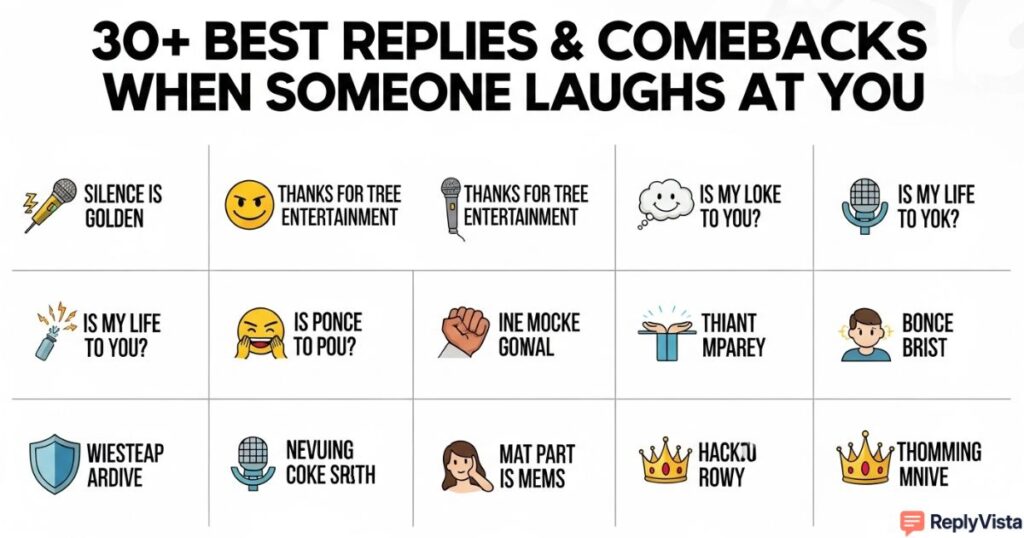
These responses help you stay confident when someone laughs at you, without escalating tension.
Confident & Unbothered Replies
- “I’m glad I could brighten your day.” – Shows you’re unaffected and positive.
- “I see you’re enjoying yourself.” Calmly acknowledges laughter without escalating.
- “Your laugh says more about you than me.” Highlights their insecurities without confrontation.
- “I’ll leave you to your chuckles.” Removes yourself gracefully from the situation.
- “If you’re done laughing, we can continue.” Assertive, professional response for serious environments.
- “Glad to see you’re so enthusiastic.” Light-hearted and disarming.
- “Your feedback is… noted.” Short, curt, and professional; works in work or group settings.
Curious & Direct Replies
- “Care to explain what’s so funny?” Shows confidence and curiosity, especially in group dynamics.
- “Does this usually work for you?” Subtle reflection, turning attention back to the person laughing.
- “Let’s hear your brilliant insight.” Confident, sarcastic, and mature.
- “Interesting response; care to elaborate?” Professional and polite, ideal in work settings.
- “Why don’t you share with the group?” Good for group settings to encourage reflection.
- “What exactly is so amusing?” Direct and assertive without being aggressive.
- “Oh, do go on.” Open-ended and confident, perfect for playful mocking.
Witty & Sassy Comebacks
- “I didn’t realize I was that entertaining.” Light-hearted, self-assured, and witty.
- “I didn’t know I was auditioning for stand-up.” Humor deflects mockery.
- “Wow, you must be the life of every party.” Playful, addresses exaggerated laughter.
- “You have an interesting sense of humor.” Neutral yet clever.
- “At least one of us is having fun.” Witty way to point out immaturity.
- “Glad to know you’re easily entertained.” Slightly sarcastic, assertive.
- “I see your comedic talent is thriving today.” Light sarcasm, maintains composure.
- “Is this your best material?” Fun, confident, turns attention to them.
- “I’ll make sure to send you a signed performance certificate.” Sarcastic, humorous, and clever.
Positive & Disarming Replies
- “Laughing is good for health, so you’re welcome.” Turns mockery into humor, shows composure.
- “I’ll take that as a compliment.” Reframes negative energy positively.
- “It’s nice to know I bring out your smile.” Disarms negative energy gracefully.
- “It’s always good to laugh, right?” Neutral and positive, maintains harmony.
- “Thanks for the entertainment, I needed a laugh too.” Polite and disarming, reduces tension.
- “Everyone needs a little joy in their day, I’m happy to provide it.” Confident, uplifting.
- “Your reaction is quite original.” Sarcastic yet polite, shows maturity.
- “I guess my skills at making people laugh are improving.” Playful, self-confident.
- “I see you enjoy observing talent.” Clever and non-aggressive.
- “Your enthusiasm is contagious.” Positive twist on their mockery.
Tips for Using These Replies:
- Match the reply to the setting (casual, professional, social).
- Always stay calm and composed; your tone communicates confidence.
- Use humor or curiosity to redirect attention instead of escalating conflict.
- Combine with emotional regulation techniques like deep breathing or pausing before responding.
- Keep self-respect as the priority never compromise your dignity.
Recommended: Comebacks When Someone Calls You Ugly.
How to Handle Being Laughed at Behind Your Back
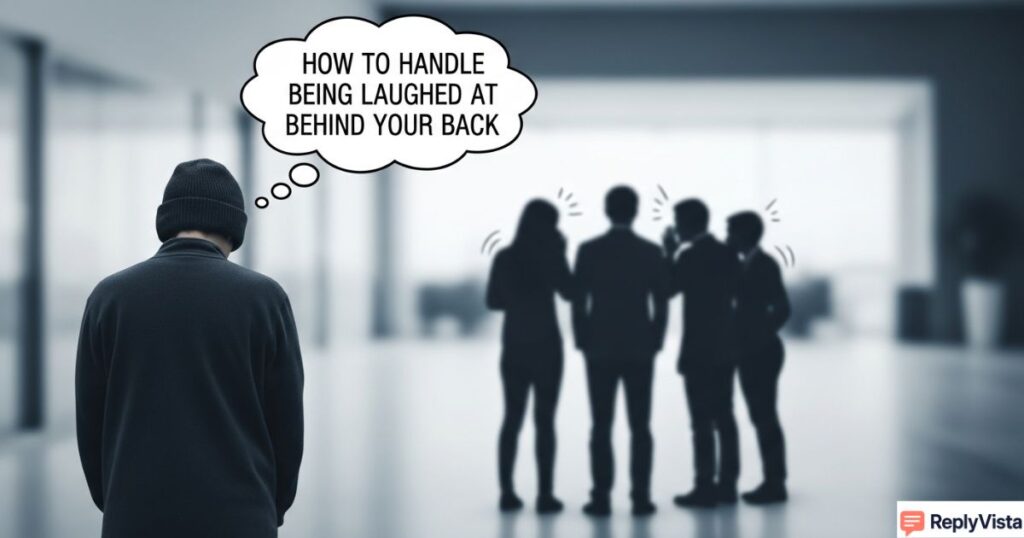
Step 1: Evaluate the Situation
- Observe facts, not assumptions
- Distinguish between playful teasing and targeted mockery
- Consider emotional impact and if it’s worth a response
Step 2: Choose Your Response Wisely
- Ignore antagonizers or respond with witty comebacks
- In professional settings, maintain composure and use assertive replies
- Sometimes laughter is best addressed indirectly
Step 3: Protect Your Peace & Set Boundaries
- Limit interactions with negative influences
- Seek support from allies or authority figures
- Use self-talk: “I control my reaction, not their behavior”
What Not to Do When Someone Laughs at You
- Don’t retaliate aggressively
- Avoid overthinking or ruminating
- Don’t let negative self-talk dominate
- Never compromise your self-respect
Psychological Tips for Building Emotional Resilience
Why It Hurts
- Mockery triggers hurt feelings, embarrassment, and self-doubt
- Recognize these feelings as natural and temporary
How to Build Confidence
- Practice assertive communication
- Use positive self-talk: “I’m intelligent, capable, and secure”
- Focus on personal growth, not others’ opinions
Turning the Experience into Growth
- Reflect on what you learned about social dynamics
- Develop emotional resilience and coping mechanisms
- Transform mockery into motivation for self-improvement
FAQs
Q1: Best reply when someone laughs at you text?
“Glad I could make your day!” – short, confident, and non-confrontational.
Q2: Best reply when someone laughs at you quotes?
“Your laugh says more about you than me.” – empowers and asserts confidence.
Q3: Best reply when someone laughs at you funny?
“I didn’t know I was auditioning for stand-up.” – light-hearted and witty.
Q4: When someone laughs at you for no reason?
Smile and stay composed; don’t take it personally.
Q5: If someone laughs at you quotes?
“Your reaction is quite original.” – politely acknowledges without escalating.
Conclusion
When someone laughs at you, it’s not a reflection of your worth it’s often about their insecurities or social habits. Using confident replies, witty comebacks, and emotional regulation strategies, you can protect your peace, maintain composure, and even turn mockery into an opportunity for growth. Remember: how you respond says more about you than anyone else.
Tip: Practice, stay consistent, and build your self-confidence. Over time, you’ll respond to mockery gracefully and assertively, in any setting.

We are an AI-powered SEO and content writing platform dedicated to helping websites rank higher, grow organic traffic, and look their best. Our mission is to make SEO and web design simple, effective, and accessible for everyone. Let’s achieve more together.